PixelSniff: A Free AI Image Detector
PixelSniff is live. Upload any photo and get a clear AI likelihood score in seconds — free, no sign-up, powered by Illuminarty.
A convincing fake image now takes about a minute to make. Telling one apart by eye takes longer than that — and most of the time, you get it wrong.
PixelSniff is live today. Upload a photo, and it tells you how likely that photo was generated by AI. It is free, it needs no account, and it takes a few seconds.
Why We Built It
AI-generated images stopped being a curiosity somewhere around the point where they started showing up in marketplace listings, dating profiles, insurance claims and news feeds. The tools to make them are everywhere. The tools to check them are not — the good ones are buried in enterprise sales funnels, and the free ones tend to be a single model behind a form that gives you a percentage with no explanation.
We wanted the check itself to be the easy part.
How It Works
Three steps, no configuration.
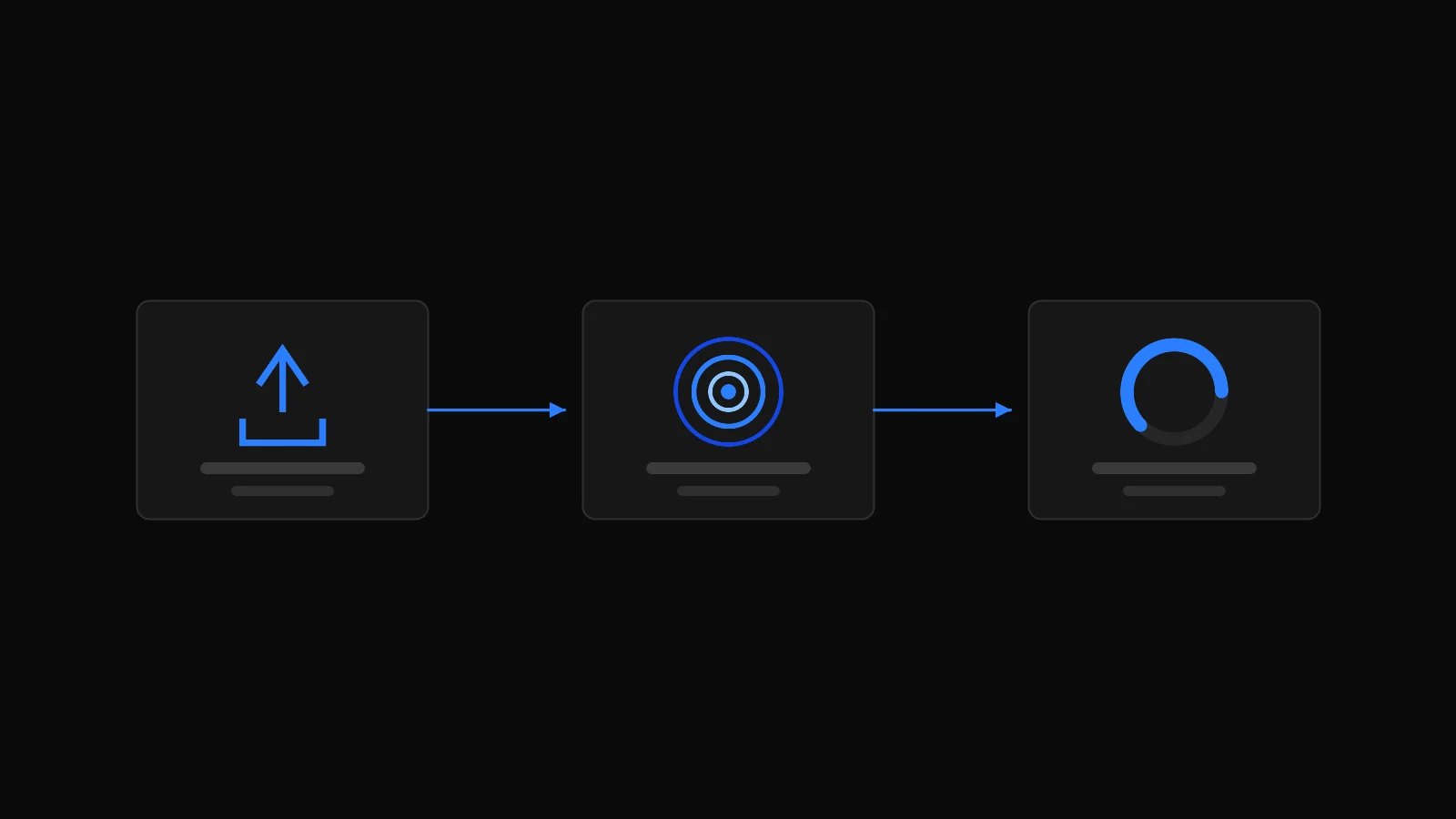
- Upload — drop in a JPG, PNG, WebP, GIF, AVIF, BMP, TIFF or HEIC file, anywhere from 1KB to 50MB.
- Analyze — the image goes to Illuminarty, a detection engine that combines several computer-vision algorithms to estimate how likely the image came from a public AI generation model.
- Score — you get a single AI likelihood score from 0 to 100, plus a verdict.
Reading the Result
The score is deliberately not a yes/no. Our thresholds are:
| Score | Verdict | What it means |
|---|---|---|
| 70–100 | AI | Strong generator fingerprints present |
| 31–69 | Uncertain | Signals are mixed or weak |
| 0–30 | Human | No meaningful generator traces found |
That middle band matters. A lot of detectors force every image into one of two buckets, which reads as confidence they have not earned. When the evidence is genuinely ambiguous — a heavily compressed screenshot, a photo that has been through three rounds of re-encoding — we would rather tell you so.
What It Catches
- Popular generators — traces left by Midjourney, DALL·E, Stable Diffusion, Flux, Gemini and others
- Deepfakes and face swaps — synthetic faces and manipulated portraits
- AI-edited photos — real photographs with inpainted, retouched or partially generated regions
What It Costs
Nothing, to start.
- Guests get 10 scans per UTC day, with no account at all
- New accounts get 10 free credits, valid for one month
- Signed in, a basic scan costs 1 credit, and you get scan history and email reports
If a scan has to queue during a busy period, leave your email and we will send the result when it lands.
An Honest Limit
No detector is perfect, and we are not going to pretend otherwise.
Detection works best on unmodified AI images. Heavy compression, screenshots, cropping, filters and repeated re-uploads all erode the signals a detector relies on. A high score is strong evidence that an image is synthetic; it is not proof. Treat the result as one input into your judgment, not a verdict to act on by itself — especially where the answer affects a person's reputation, a claim, or a legal matter.
That caveat is why the middle band exists, and why we are working on the next layer: showing you which parts of an image look generated, and why.
Try it now — no sign-up required.